
When to Remove Concrete Formwork | Principles, Time Standards and Key Notes
To sum up, concrete formwork removal is a standardized and scientific construction procedure rather than empirical operation. Construction teams must formulate targeted demolding schemes according to structural types
9/21/20263 min read
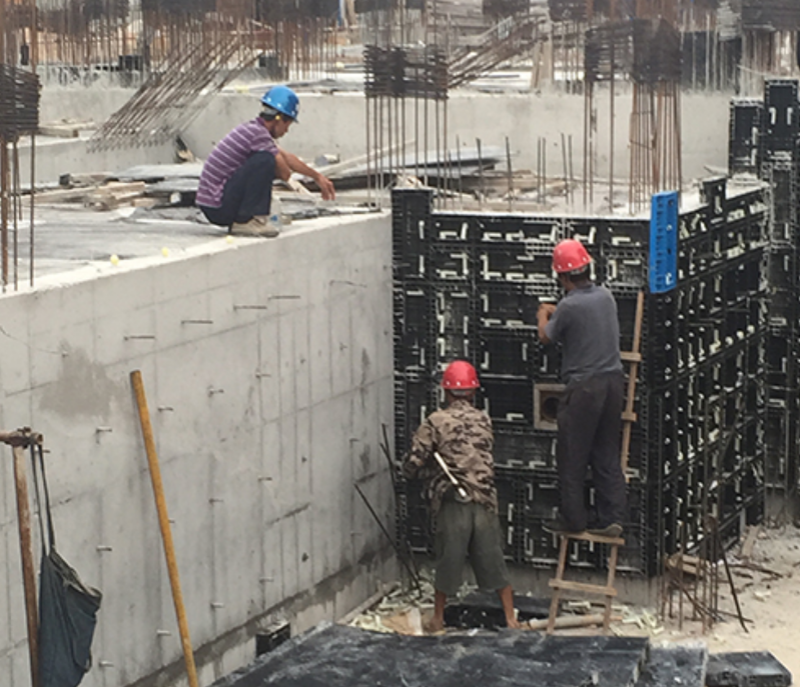

When to Remove Concrete Formwork | Principles, Time Standards and Key Notes
1. Introduction
Concrete formwork acts as a temporary shaping and supporting structure to hold fresh concrete in place until it develops stable structural strength. Formwork removal is one of the most critical procedures in concrete construction, which directly determines the final concrete quality, structural safety, surface flatness and overall construction progress. Unreasonable demolding time will bring multiple construction risks. Early formwork removal may cause concrete deformation, wall bulging, edge chipping and structural cracks. Excessively delayed demolding will reduce formwork turnover efficiency, prolong the project cycle and increase construction costs. Therefore, it is necessary to master scientific and standardized formwork removal timing for modern high-quality concrete projects.
2. Core Principles of Formwork Removal
The general principle for concrete formwork removal is strength priority, graded construction and safety first. Demolding work cannot be carried out merely based on construction experience. The fundamental judgment standard is whether the concrete has reached the compressive strength specified by international and national building codes. In actual construction, the demolding time is comprehensively affected by structural component types, concrete mix proportion, ambient temperature, curing conditions and formwork materials. Different structural parts bear different stress types, so they adopt completely different demolding time standards.
3. Demolding Time for Vertical Structural Components
Vertical components mainly include concrete walls, columns and shear walls, which mainly bear vertical pressure without large-span bending tension, so their demolding requirements are relatively lenient. Under normal temperature and standard moisture curing conditions, wall and column formwork can be removed 12 to 24 hours after concrete pouring. The precondition is that the concrete surface has formed stable hardness without peeling, chipping or deformation after demolding.
This standard is widely applicable to conventional residential and commercial building projects, which helps speed up formwork turnover and improve construction efficiency. In low-temperature, humid or harsh environments, the demolding time should be properly delayed to avoid surface damage and ensure complete concrete forming quality.
4. Demolding Time for Horizontal Structural Components
Horizontal components such as floor slabs, beams and cantilever structures bear self-weight and bending loads, leading to stricter demolding standards. Their removal time is strictly determined according to the percentage of concrete strength reaching the design value.
For ordinary slabs with a span less than 2 meters, formwork can be removed when the concrete strength reaches 50% of the design strength, which takes about 3 to 4 days of standard curing. For beams and slabs with a span of 2 to 8 meters, concrete strength needs to reach 75% of the design value, requiring 7 to 10 days of curing. For large-span structures over 8 meters and all overhanging components, formwork can only be removed until the concrete achieves 100% design strength, with a curing period of no less than 14 days.
5. Key Factors Affecting Demolding Time
Ambient temperature and curing conditions are the most influential external factors. In high-temperature seasons, concrete hydration reaction accelerates, and strength grows faster, so the demolding time can be appropriately advanced. In low-temperature winter construction or continuous rainy weather, the hydration rate slows down obviously, and the strength growth period is prolonged. In this case, demolding must be delayed strictly.
It is forbidden to remove formwork by empirical judgment under extreme weather conditions. Blind early demolding will easily cause invisible structural damage and leave long-term safety hazards to the building.
6. Standard Demolding Operation and Precautions
Formwork removal must follow the reverse sequence of formwork installation: remove auxiliary parts first and main stress parts later, and dismantle from top to bottom. After demolding, workers must conduct a comprehensive inspection on the concrete surface to check for cracks, pits, deformation and other defects. Continuous water curing should be maintained after formwork removal to ensure the steady growth of long-term concrete strength.
At present, lightweight plastic formwork and light steel formwork are widely used in modern construction with convenient disassembly performance. However, efficient disassembly shall not be the reason for advanced demolding. All demolding operations must strictly comply with concrete strength standards to ensure structural safety and construction quality.
7. Conclusion
To sum up, concrete formwork removal is a standardized and scientific construction procedure rather than empirical operation. Construction teams must formulate targeted demolding schemes according to structural types, ambient temperature, curing environment and design strength requirements. Reasonable demolding time can effectively guarantee concrete structural safety and smooth surface forming quality, while maximizing formwork turnover efficiency, balancing construction safety, quality and progress, and optimizing the overall economic benefits of engineering projects.