
How to Build Concrete Stairs Formwork with Plastic Formwork
By following these three core steps — detailed design and drawing, secure connection with handles, and robust steel pipe reinforcement — you can build a reliable, efficient plastic formwork system for concrete stairs
5/8/20265 min read
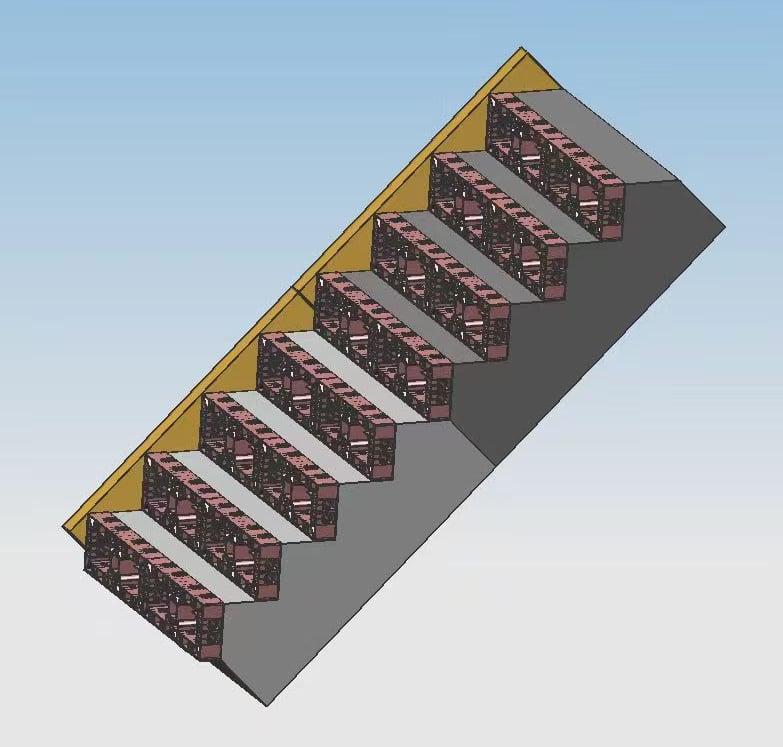
Concrete stairs are a durable, versatile component in both residential and commercial construction, and the quality of their formwork directly determines the stairs’ structural integrity, dimensional accuracy, and surface finish. Plastic formwork has emerged as a superior alternative to traditional timber or steel formwork for concrete stairs, thanks to its lightweight, waterproof, corrosion-resistant, and reusable properties — making the construction process more efficient, cost-effective, and labor-saving. Below is a step-by-step guide to building concrete stairs formwork using plastic formwork, focusing on three core stages: design and drawing, formwork connection with handles, and steel pipe reinforcement.
Step 1: Design and Draw the Formwork Plan
The first and most critical step in building concrete stairs formwork is to create a detailed design and technical drawing, which serves as the blueprint for the entire construction process. This stage ensures that the formwork aligns with the stairs’ intended dimensions, slope, and structural requirements, avoiding errors during assembly and concrete pouring.
Start by confirming the key parameters of the concrete stairs, including the total height, number of steps, tread depth (the horizontal part of each step), riser height (the vertical part between two steps), and the overall length of the stair flight. These parameters should comply with local building codes and the project’s design specifications. Next, use professional drawing software (such as AutoCAD) or hand-drawing tools to sketch the formwork’s cross-sectional view, elevation view, and detailed joint drawings.
When designing the plastic formwork layout, consider the modular nature of plastic formwork panels — most plastic formwork comes in standard sizes (e.g., 675×600×75mm or 725×600×75mm) and can be customized to fit unique stair dimensions. Mark the position of each plastic panel, the location of connection points (where handles will be installed), and the spacing of steel pipe supports. Ensure that the formwork design accounts for the weight of wet concrete (typically 60 kN/sqm for ABS plastic formwork) and the pressure exerted during pouring, to prevent deformation or collapse. Additionally, include provisions for drainage holes to remove excess water and air bubbles, ensuring a dense, high-quality concrete finish.
Once the design is complete, review and verify the drawings with the construction team to confirm accuracy, as any discrepancies in the design will lead to flawed formwork and, ultimately, substandard concrete stairs.
Step 2: Connect Plastic Formwork Panels with Handles
After finalizing the design and preparing the required plastic formwork panels (preferably ABS, PP, or HDPE plastic, which offer excellent durability and reusability), the next step is to assemble the panels using dedicated connecting handles. This connection method is a key advantage of plastic formwork, as it simplifies installation and disassembly, saves labor, and ensures a tight, stable joint between panels.
First, prepare the construction site by leveling the base and marking the positions of the formwork panels according to the design drawing. Clean the plastic panels to remove any dust, debris, or oil, as these can affect the adhesion between the formwork and concrete, leading to surface defects. Plastic formwork is lightweight (11–15 kg/sqm), so it can be easily maneuvered and positioned by a single worker without heavy lifting equipment.
Begin assembling the formwork from the bottom of the stairs, working upward. Align the edges of two adjacent plastic panels tightly, ensuring there are no gaps (which could cause concrete leakage). Insert the connecting handles — typically high-strength nylon or plastic handles designed for plastic formwork — into the pre-drilled holes on the panel edges. Rotate the handles 90 degrees to lock the panels together firmly; each panel should be secured with at least 4 handles to ensure stability, and additional handles should be used at corner joints or longer panel lengths.
Pay special attention to the alignment of the treads and risers during assembly. Use a level to check that the treads are horizontal and the risers are vertical, adjusting the panels as needed. The handles not only secure the panels but also provide a comfortable grip for workers to adjust and position the formwork, reducing the risk of accidents and improving work efficiency. For irregular or custom-shaped stairs, use modular plastic panels that can be freely spliced like building blocks, with connecting handles ensuring a tight fit between non-standard sections.
After connecting all panels, inspect the entire formwork structure to ensure all joints are tight, there are no loose panels, and the dimensions match the design drawing. Any gaps should be sealed with waterproof tape or sealant to prevent concrete slurry leakage during pouring.
Step 3: Reinforce the Formwork with Steel Pipes
Even though plastic formwork is sturdy and can withstand significant loads, additional reinforcement with steel pipes is essential to ensure the formwork remains stable during concrete pouring and curing. Steel pipe supports (also known as steel props) provide high strength, rigidity, and adjustability, making them ideal for reinforcing concrete stair formwork.
Start by selecting the appropriate steel pipes — galvanized or painted steel pipes are recommended, as they are corrosion-resistant and have a longer service life. The steel pipes should have a thickness of 2.0–3.0 mm and be adjustable in length (typically 1000–3200 mm) to fit different stair heights and slopes. A complete steel prop set includes a top plate, base plate, inner pipe, outer pipe, sleeve, nut, and pin, which allows for easy adjustment and secure locking.
Install the steel pipe supports at regular intervals along the length of the stairs, focusing on areas with the highest load (e.g., under the treads and at the bottom and top of the stair flight). The spacing between steel pipes should not exceed 1.2 meters, and additional supports should be added at corners and joints to prevent deflection. For the base of each steel pipe, place a solid base plate (preferably made of steel) to distribute the load evenly and avoid sinking into the ground.
Adjust the height of the steel pipes using the sleeve and nut, ensuring the top plate presses firmly against the bottom of the plastic formwork panels. Use a level to check that the steel pipes are vertical and the formwork is level, making fine adjustments as needed. For added stability, connect adjacent steel pipes with horizontal steel bars (cross-bracing) at mid-height, using clamps to secure the connections. This cross-bracing prevents the steel pipes from swaying or collapsing under the pressure of wet concrete.
After installing all steel pipe supports and cross-bracing, conduct a final inspection of the entire formwork system. Shake the formwork gently to check for stability, ensure all steel pipes are tightly locked, and verify that the formwork dimensions are consistent with the design. Any loose connections or unstable supports should be fixed immediately to avoid accidents during concrete pouring.
Final Notes Before Concrete Pouring
Before pouring concrete, apply a release agent to the inner surface of the plastic formwork. This helps the formwork separate easily from the concrete after curing, ensuring a smooth, blemish-free surface and extending the life of the plastic formwork (which can be reused up to 100 times with proper care). Additionally, ensure that the steel reinforcement (if required) is properly installed inside the formwork, as per the project’s design.
By following these three core steps — detailed design and drawing, secure connection with handles, and robust steel pipe reinforcement — you can build a reliable, efficient plastic formwork system for concrete stairs. Plastic formwork’s lightweight, reusable, and waterproof properties, combined with the stability of steel pipe reinforcement, not only simplifies the construction process but also ensures the final concrete stairs are structurally sound, dimensionally accurate, and aesthetically pleasing.